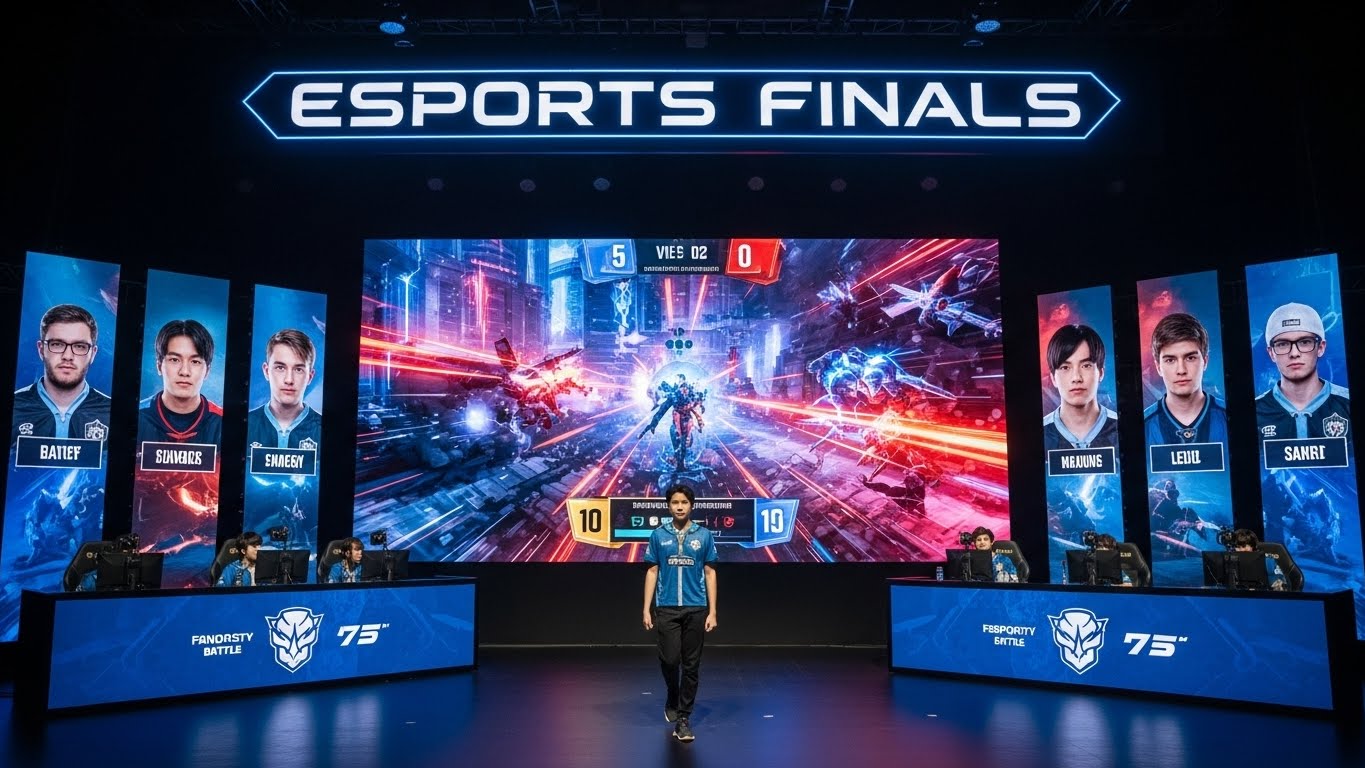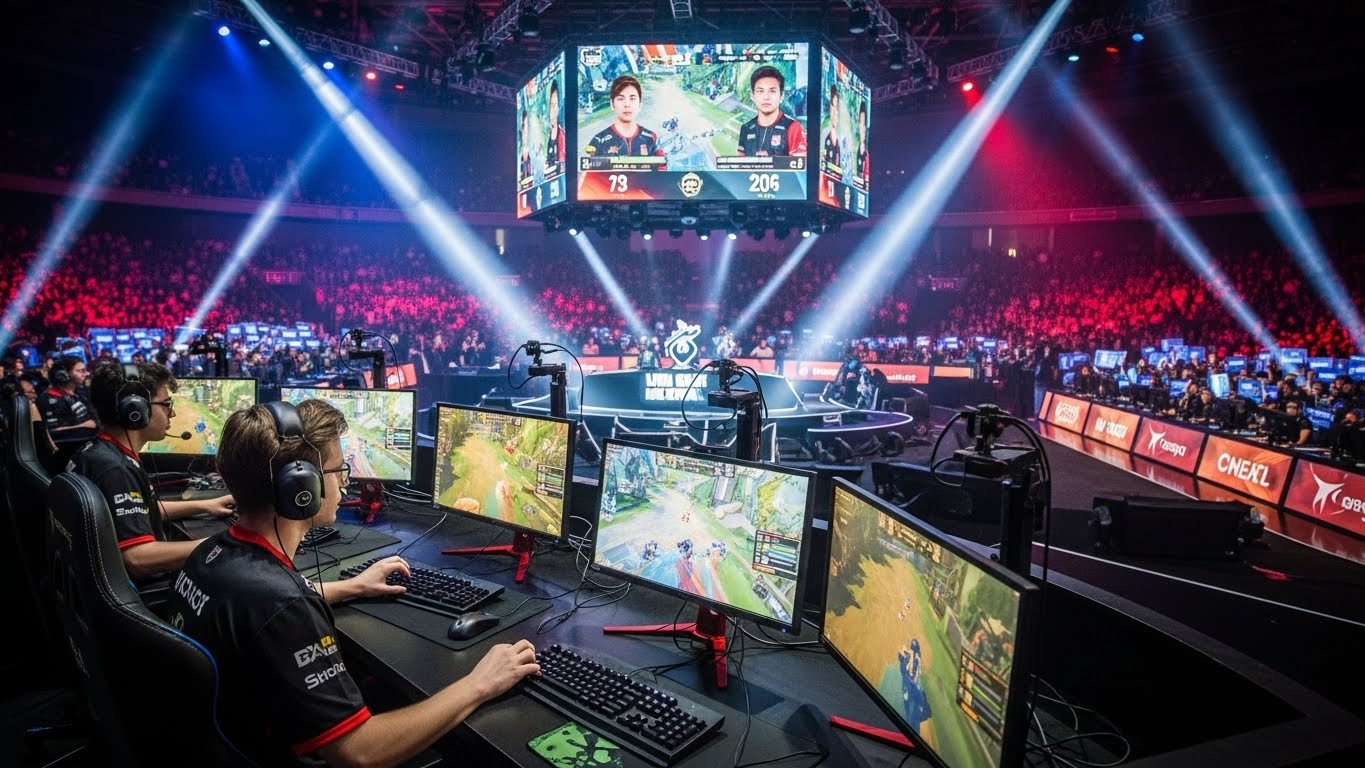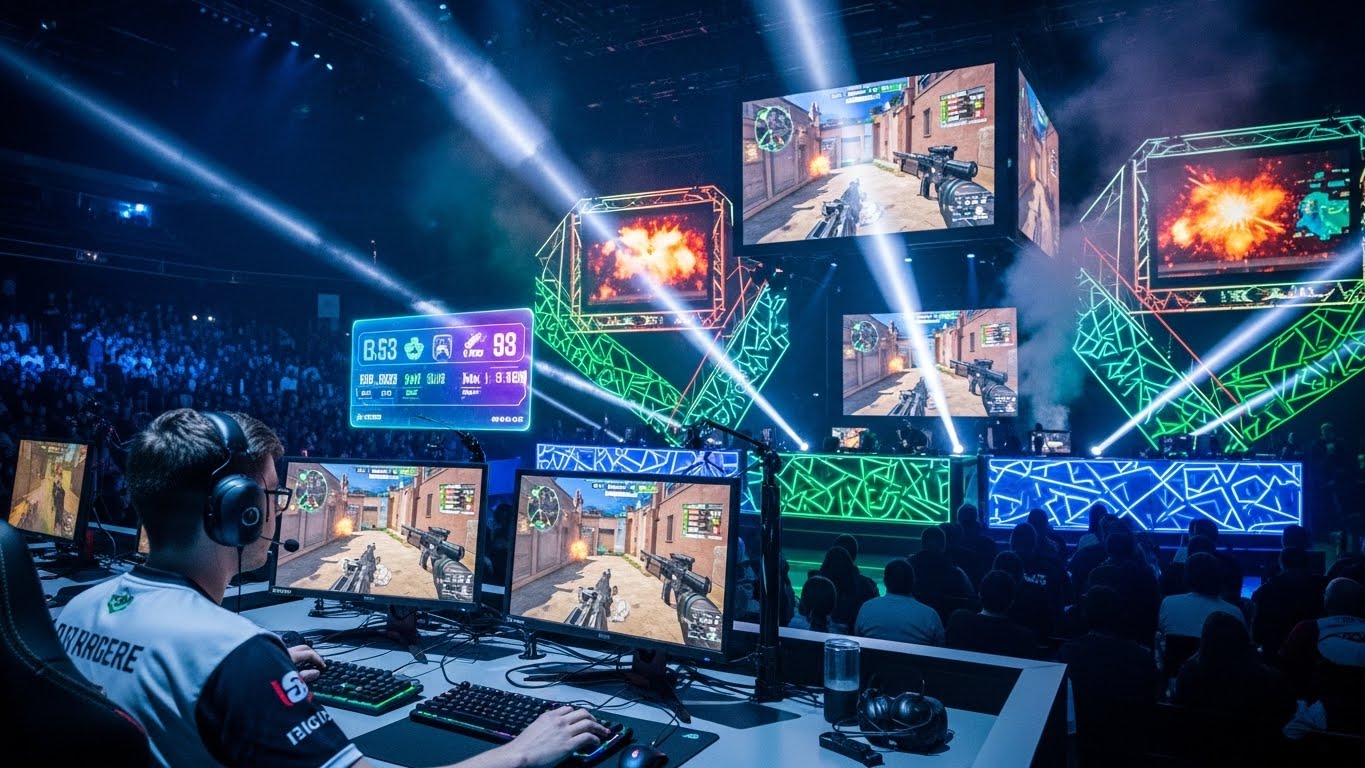
Esports, or electronic sports, has exploded into the global spotlight over the last decade, transforming from a niche hobby to a multi-billion-dollar industry. What was once seen as a pastime for “gamers” has evolved into a legitimate career path, with tournaments, sponsorships, and professional teams now dominating the competitive landscape. In this blog, we will explore the rise of esports, the factors contributing to its success, the role of technology, and what the future holds for this exciting industry.
The Birth of Esports: From Arcade Games to Professional Tournaments
Esports has roots that trace back to the early 1970s, when video games first began to gain popularity. The first recorded competitive gaming event took place in 1972 at Stanford University, where students competed in a game called Spacewar. However, it wasn’t until the late 1990s and early 2000s that esports started to take shape in the way we recognize it today.
The rise of popular games such as StarCraft, Counter-Strike, and Warcraft III in the late 1990s and early 2000s laid the groundwork for organized tournaments. The Cyberathlete Professional League (CPL), founded in 1997, was one of the first major esports leagues, offering substantial cash prizes for winners. These early tournaments were small-scale events, but they demonstrated the potential of competitive gaming as a serious form of entertainment.
The true breakthrough for esports came in the mid-2000s, when South Korea embraced competitive gaming in a way that no other country had. With a strong culture of StarCraft players and the establishment of dedicated television channels and esports arenas, South Korea became the global hub for competitive gaming. The introduction of League of Legends in 2009 and the subsequent rise of its professional leagues further solidified the legitimacy of esports as a mainstream phenomenon.
The Role of Technology in Esports Growth
The rapid advancement of technology has played a crucial role in the expansion of esports. High-speed internet, the rise of streaming platforms like Twitch, and improvements in gaming hardware have all contributed to creating an environment where competitive gaming can thrive.
High-Speed Internet: The evolution of internet speed and reliability has been one of the most significant factors in making esports as popular as it is today. Online gaming requires fast, stable connections, and improvements in broadband infrastructure have made it possible for players around the world to compete in real-time, often with minimal latency. This, in turn, has allowed for larger-scale online tournaments, where players from different countries can compete without being hindered by poor connections.
Streaming Platforms: Platforms like Twitch, YouTube Gaming, and Facebook Gaming have revolutionized the way fans interact with esports. These platforms provide live streams of tournaments, allowing viewers to watch their favorite players and teams in action. In addition, they enable gamers to showcase their skills, interact with fans, and build a following, turning casual streamers into esports stars. The accessibility of these platforms has also led to the democratization of esports, allowing anyone with an internet connection to participate, watch, or even make a career out of streaming.
Advanced Gaming Hardware: The development of cutting-edge gaming equipment, such as high-performance graphics cards, gaming peripherals (mice, keyboards, headsets), and gaming consoles, has also played a pivotal role in improving the overall quality of competitive gaming. With better performance and enhanced graphics, games have become more engaging, and players can compete at higher levels of precision and skill.
The Economics of Esports: A Booming Industry
Esports has evolved into a multi-billion-dollar industry with numerous stakeholders, from game developers and professional teams to sponsors and streaming platforms. But how did it go from a niche interest to a major economic force?
Tournaments and Prize Pools: Esports tournaments now boast prize pools that rival traditional sports. The International, an annual Dota 2 tournament organized by Valve, is famous for its enormous prize pool, which has exceeded $40 million in recent years. This level of financial support has attracted top-tier talent and investment, leading to further professionalization of the industry. Other games, like League of Legends, Fortnite, and CS:GO, also offer significant prize money and draw massive global audiences.
Sponsorships and Advertisements: Esports’ popularity has caught the attention of major brands looking to tap into a younger, tech-savvy demographic. Companies like Coca-Cola, Intel, Red Bull, and Nike have signed sponsorship deals with esports teams, players, and tournaments. These partnerships help fund teams and competitions while providing brands with valuable marketing opportunities.
Streaming and Media Rights: As more esports tournaments are streamed online, media rights have become another lucrative source of revenue. Major platforms like Twitch, YouTube, and Facebook pay to secure broadcasting rights for top-tier esports events. In addition, the emergence of TV channels dedicated solely to esports, such as ESPN’s ESPN2 broadcasting E-League or CBS Sports showcasing eNASCAR, is helping to bring esports into the living rooms of mainstream audiences.
Team and Player Salaries: Esports athletes are now enjoying salaries that are comparable to those of professional athletes in traditional sports. With major organizations and sponsors backing esports teams, players can earn significant income through salaries, performance bonuses, and prize winnings. Some of the most successful esports players make millions of dollars a year from prize money alone, with additional earnings from streaming and sponsorships.
Esports and the Global Community: A Cultural Phenomenon
One of the most fascinating aspects of esports is its ability to bring together people from different backgrounds, cultures, and regions. Esports has created a unique global community where players and fans from all over the world can connect, compete, and share their passion for gaming.
Cross-Cultural Collaboration: Games like League of Legends, Overwatch, and Valorant have created international competitions that bring together players from Europe, North America, Asia, and beyond. Teams often have players from different countries, and tournaments feature competitors from all around the globe. This level of cross-cultural collaboration is one of the driving forces behind esports’ appeal, as it fosters a sense of global unity.
Fans and Viewership: The rise of esports has also created a dedicated fanbase that is just as passionate as fans of traditional sports. Online forums, social media platforms, and live streams allow fans to connect with their favorite players, discuss strategies, and cheer for their teams. Esports has become a form of entertainment that is interactive, where fans can influence the outcome of matches through their engagement and support. In many ways, the esports community is as much about the fans as it is about the players.
The Future of Esports: What’s Next?
As esports continues to grow, the future holds exciting possibilities. Here are a few key trends that are likely to shape the future of the industry:
Mobile Gaming: The rise of mobile gaming has opened up new avenues for esports. Games like PUBG Mobile and Clash Royale have gained huge popularity, especially in regions like Southeast Asia and India. Mobile esports tournaments are likely to become more prevalent as mobile gaming continues to outpace traditional gaming platforms in terms of users and revenue.
Virtual Reality (VR) and Augmented Reality (AR): While still in its early stages, VR and AR are poised to revolutionize esports. The immersive nature of VR gaming could offer a completely new type of competitive experience, one that goes beyond traditional gaming screens. As the technology matures, we may see a new wave of esports tournaments based around VR or AR platforms.
Inclusion and Diversity: The esports community is making efforts to become more inclusive and diverse, both in terms of gender and cultural representation. Initiatives to support women in esports, as well as increased opportunities for players from underrepresented regions, are already beginning to take shape. As the industry grows, it’s likely that we’ll see even more focus on inclusivity and creating a welcoming environment for all players.
Conclusion
Esports is no longer just a trend or a hobby; it has evolved into a global cultural and economic force that is reshaping the world of sports and entertainment. With its rapid growth, technological advancements, and the rise of professional players and teams, esports is poised to continue its upward trajectory in the years to come.
As technology continues to advance, and as more people around the world embrace the excitement of competitive gaming, esports will undoubtedly remain at the forefront of the entertainment industry. Whether you’re a casual gamer or a dedicated esports enthusiast, the future of this industry looks bright, and the best is yet to come.