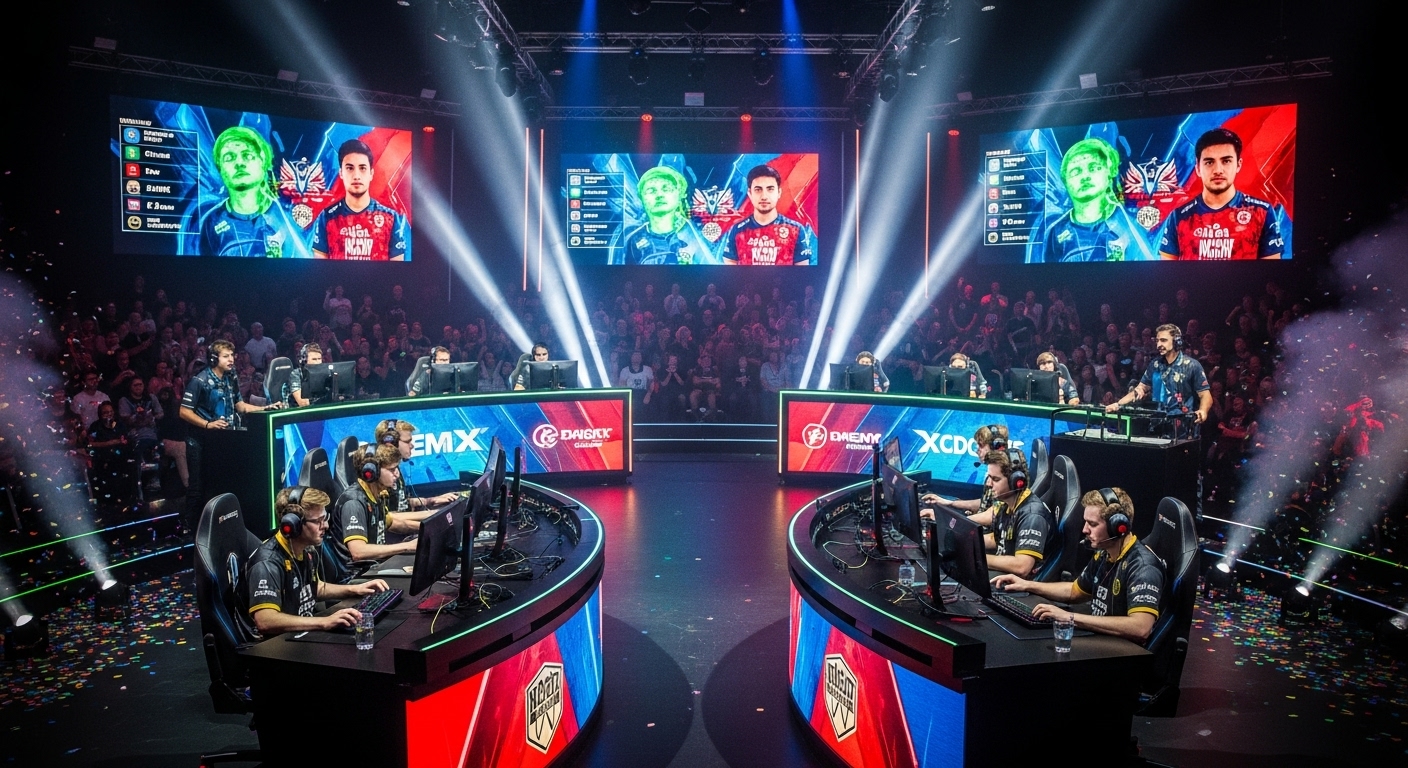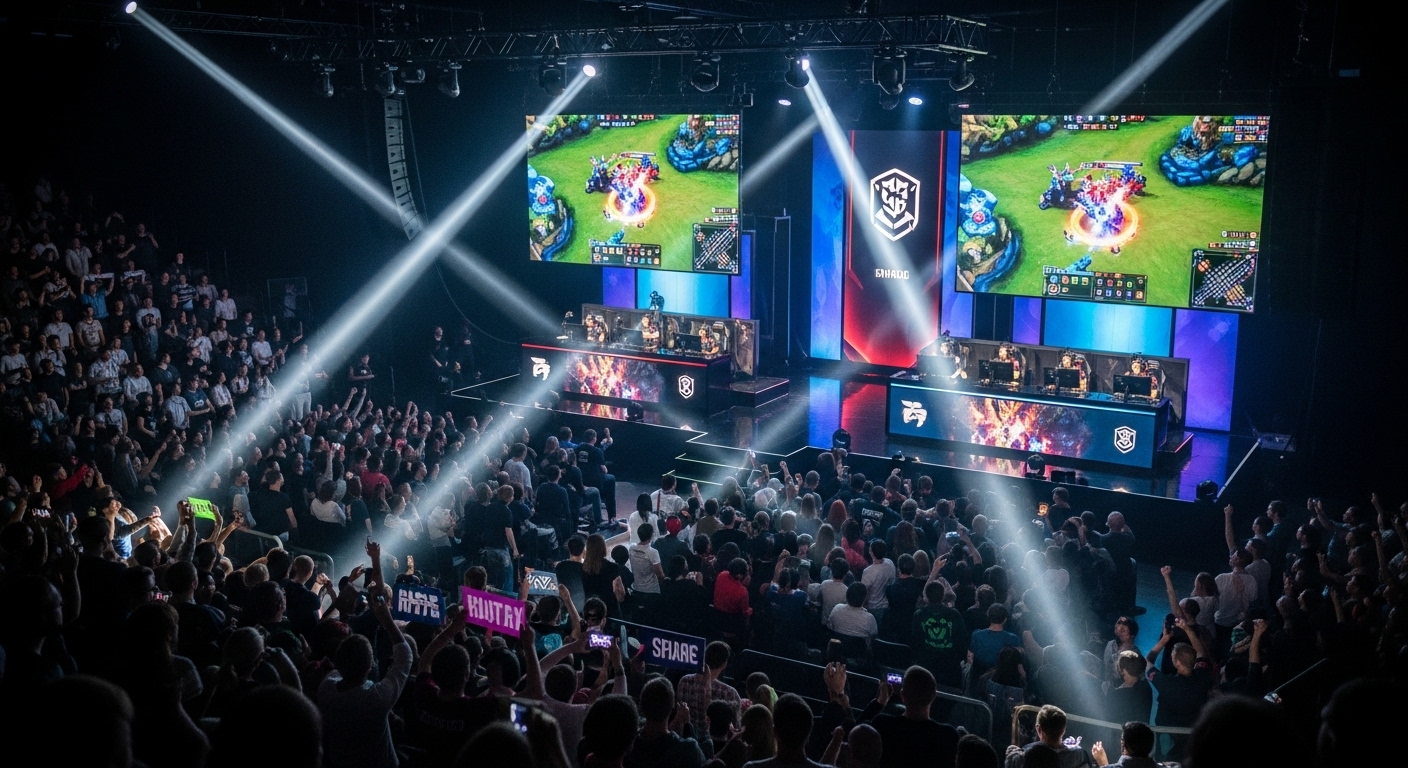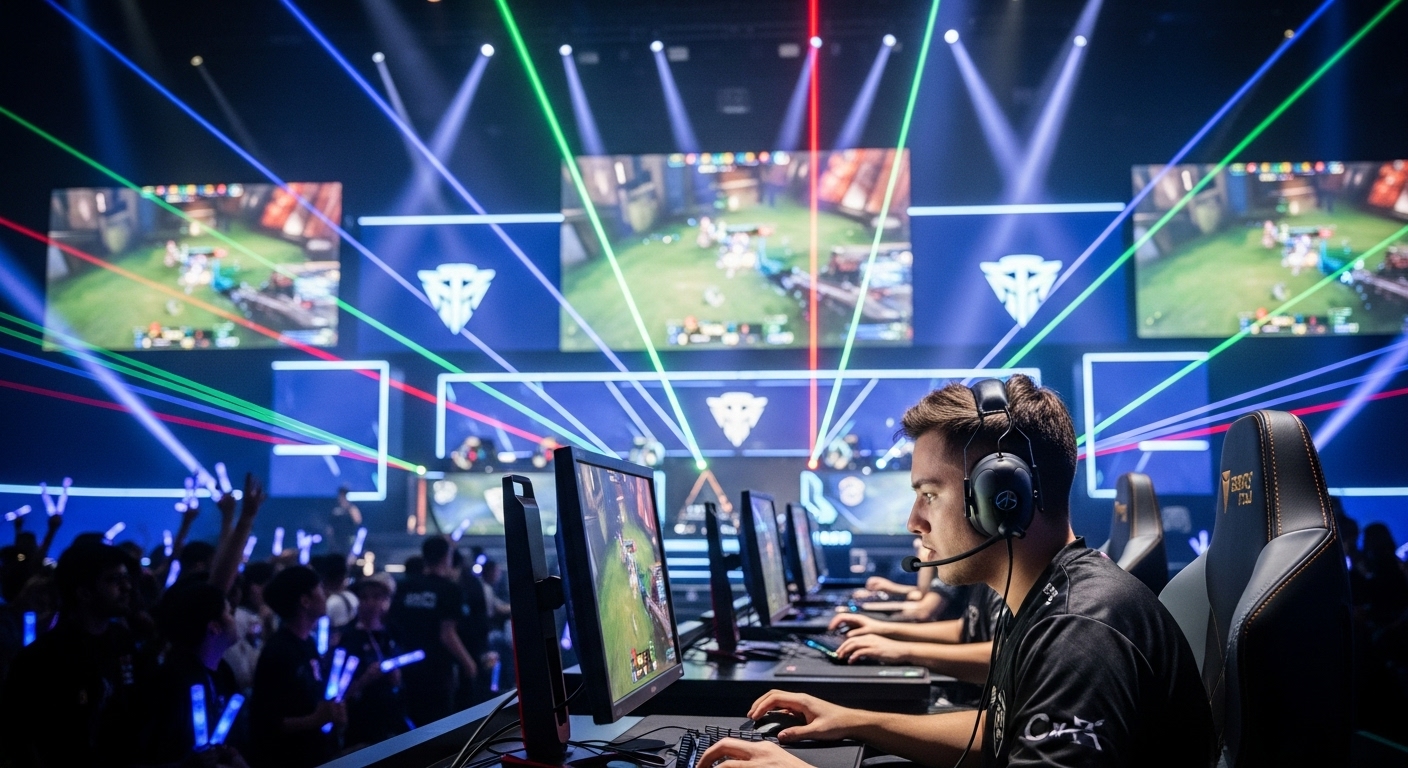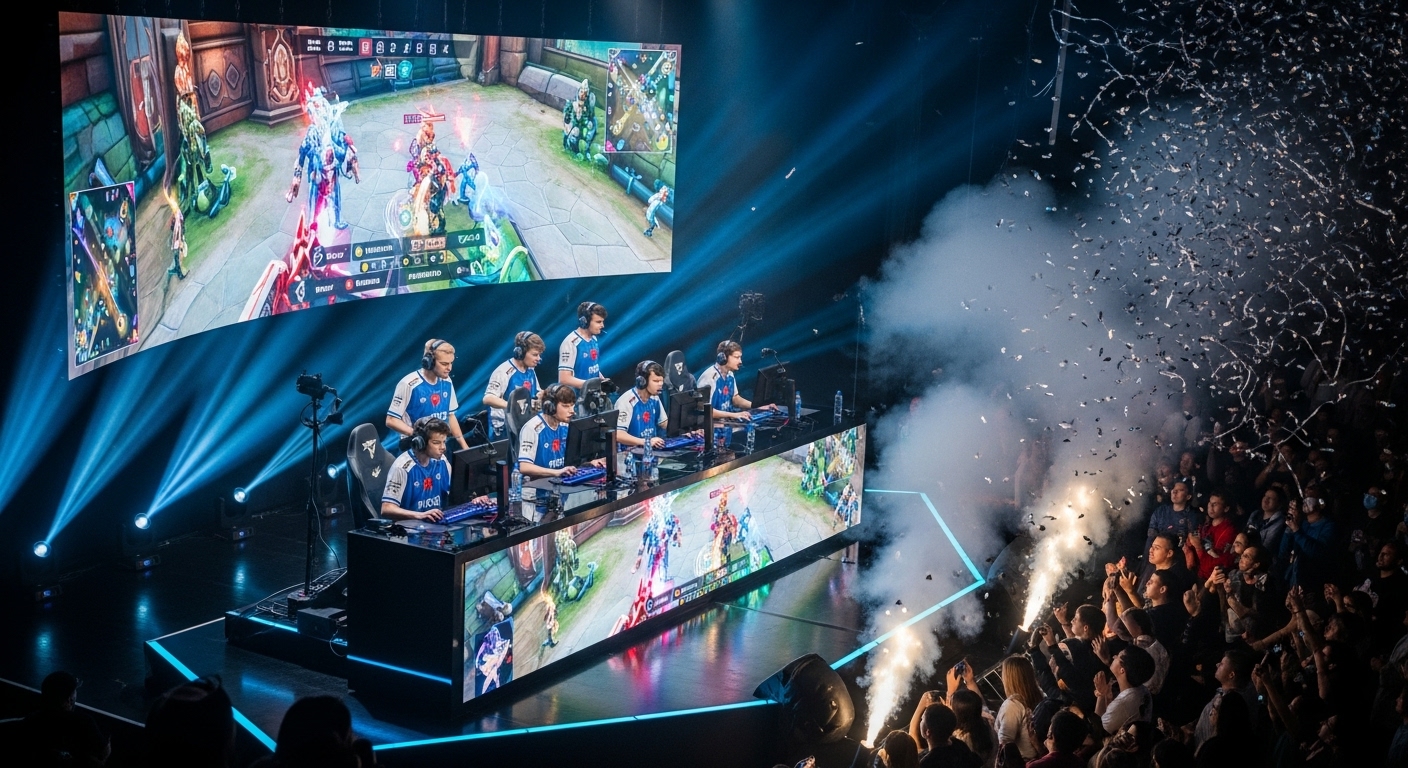
Esports, once a niche activity for a dedicated few, has evolved into one of the most significant cultural phenomena of the 21st century. What was once viewed as “just playing video games” is now a global industry worth billions of dollars, attracting millions of viewers, dedicated fans, and professional players from all corners of the world. Esports has grown beyond its humble beginnings as a hobbyist competition into a legitimate career path, with players and teams competing for massive prize pools, sponsorship deals, and recognition as elite athletes.
In this blog post, we will dive deep into the world of esports, exploring its origins, the structure of the competitive scene, the key games that dominate the industry, the impact it has on global culture, and the exciting future that lies ahead for competitive gaming.
The Origins of Esports: From LAN Parties to Global Competitions
The roots of esports can be traced back to the early days of gaming itself. While video games began as single-player experiences or small-scale local multiplayer games, it didn’t take long for players to see the potential for competition. The first major example of competitive gaming dates back to the late 1990s when a game called Quake sparked interest in competitive play. Players from around the world began organizing tournaments, and the Quake World Championship in 1997 is often considered one of the first significant esports events.
During this time, LAN (Local Area Network) parties became a popular social event where players would gather in large rooms, set up their computers, and compete against one another in games like Quake, StarCraft, and Counter-Strike. These events were small by today’s standards, but they laid the foundation for the esports scene by fostering a sense of community and camaraderie around competitive gaming.
In the early 2000s, as internet speeds increased and online multiplayer games gained popularity, competitive gaming began to expand beyond local events. Games like Warcraft III, Counter-Strike, and StarCraft became the backbone of early esports competitions, with players competing for cash prizes and sponsorships. In 2003, the launch of Major League Gaming (MLG) in the United States further accelerated the growth of esports by organizing professional tournaments and broadcasting events to wider audiences. This marked the beginning of competitive gaming as a legitimate entertainment industry.
The Growth of Esports: Key Milestones and Global Expansion
By the late 2000s and early 2010s, esports was poised for rapid growth. A combination of technological advancements, the increasing popularity of streaming platforms, and the rise of social media played pivotal roles in shaping the esports ecosystem. The development of streaming platforms like Twitch in 2011 allowed fans to watch live competitive gaming in real time, which gave esports a global platform. Players and teams could now broadcast their matches and build fanbases, while viewers could watch high-level play, discuss strategies, and interact with other fans.
Esports events also began to grow in scale. One of the defining moments of esports’ rise was the first League of Legends (LoL) World Championship in 2011, which drew an enormous viewership and solidified the game’s place as one of the top competitive titles. By 2013, the League of Legends World Championship had reached over 32 million viewers, outstripping even traditional sports events like the Super Bowl in terms of viewership.
In addition to League of Legends, other games like Dota 2, Counter-Strike: Global Offensive (CS:GO), Overwatch, and Fortnite became integral parts of the esports ecosystem. Each game introduced its own set of mechanics, strategies, and player communities, and their competitive scenes flourished with the backing of large organizations and sponsors.
Esports also began to see the emergence of professional teams and player contracts, further legitimizing the industry. Major esports organizations such as Cloud9, Team Liquid, T1, and FaZe Clan attracted significant investment, and players became stars in their own right, with many securing endorsement deals and media appearances. At the same time, esports tournaments and leagues began offering substantial prize pools, with some events boasting rewards in the tens of millions of dollars. The International, the Dota 2 World Championship, has consistently featured prize pools exceeding $30 million, setting new standards for competitive gaming rewards.
The Esports Ecosystem: Key Players, Teams, and Organizations
Esports today is a complex ecosystem with multiple layers of competition, business, and entertainment. Central to this ecosystem are the professional players who compete at the highest level in various games. These players are often signed to professional esports organizations, which provide them with salaries, coaching, training facilities, and a platform to compete in tournaments.
Esports organizations are the backbone of the industry, with many of the biggest names operating across multiple games. These organizations scout and sign talented players, create sponsorship and media deals, and handle team management. The most successful esports organizations often have players competing in different games simultaneously, ranging from League of Legends to Valorant and Call of Duty.
In addition to organizations, game developers play a significant role in the esports ecosystem. Games like League of Legends (Riot Games), Dota 2 (Valve), and Overwatch (Blizzard Entertainment) have built their own competitive structures, with regular updates, new content, and a focus on balancing the games for competitive play. Game developers also sponsor large-scale tournaments, sometimes organizing official league systems to further enhance the visibility and sustainability of esports.
Broadcasting platforms like Twitch, YouTube Gaming, and Facebook Gaming provide essential support for the esports ecosystem. These platforms allow streamers to broadcast their gameplay to millions of viewers and interact with their fanbase. Many top esports players have become popular content creators, building massive followings on these platforms, which in turn has fueled the growth of esports as entertainment.
The Top Games of Esports: A Diverse Range of Competitions
One of the hallmarks of the esports industry is the variety of games that have competitive scenes. Here are some of the most popular and influential games that dominate the esports landscape:
- League of Legends (LoL)
League of Legends is arguably the most successful and influential esports title of all time. Developed by Riot Games, LoL has been a staple of the competitive gaming scene since its release in 2009. The game features fast-paced, team-based gameplay where two teams of five players battle to destroy each other’s base. LoL’s World Championship is one of the most-watched esports events in the world, and the game’s competitive scene has grown to include regional leagues, international tournaments, and a vast ecosystem of professional teams. - Dota 2
Dota 2, developed by Valve, is another giant in the esports world. Known for its high skill ceiling and intricate gameplay mechanics, Dota 2 has one of the largest esports prize pools in history. The Dota 2 International, held annually, is famous for its massive prize pools funded through a unique crowdfunding model, where a percentage of in-game purchases is contributed to the tournament’s prize pool. - Counter-Strike: Global Offensive (CS:GO)
CS:GO, a first-person shooter developed by Valve and Hidden Path Entertainment, has a long history of competitive play. Since its release in 2012, CS:GO has been a cornerstone of the esports community, with professional teams competing in global tournaments like ESL One and the CS:GO Major Championships. The game’s strategic depth, coupled with its fast-paced action, has made it a favorite among both players and viewers. - Overwatch
Overwatch, developed by Blizzard Entertainment, introduced a new genre of esports, combining first-person shooting mechanics with team-based abilities and strategies. The Overwatch League (OWL) has become one of the most popular and innovative esports leagues, featuring city-based teams and a unique structure that mirrors traditional sports leagues. With colorful heroes, varied playstyles, and tactical team coordination, Overwatch has brought in millions of viewers worldwide. - Fortnite
Although not traditionally considered an esports game, Fortnite has become a giant in the competitive gaming world due to its battle royale format and massive player base. The Fortnite World Cup, with a prize pool of $30 million, was one of the most high-profile esports events ever held. Fortnite’s unique blend of building mechanics, shooting, and strategy has made it a highly competitive game with a rapidly growing community. - Valorant
Valorant, released in 2020 by Riot Games, is a tactical first-person shooter that combines elements of Counter-Strike with unique character abilities similar to those found in Overwatch. The game quickly became a top contender in the esports scene, with competitive leagues, major tournaments, and a dedicated player base.
The Impact of Esports: Beyond Entertainment
Esports is not just a form of entertainment—it has had a profound impact on society and culture. From the rise of esports as a legitimate career path to its integration into mainstream media, esports is changing how people perceive gaming as a whole.
One of the most significant impacts of esports is the normalization of gaming as a professional career. Professional gamers, coaches, analysts, and content creators now have opportunities to earn substantial incomes, making gaming a viable career choice for many talented individuals. Esports has also inspired the creation of esports programs in schools and universities, with scholarships and academic opportunities being offered to talented players.
Esports has also helped bridge the gap between gaming and traditional sports. As esports grows in popularity, many sports organizations and investors are entering the scene, seeking to tap into the potential of esports as a global entertainment medium. This has led to greater recognition of esports as a legitimate